
AI, Reveal Thyself.
Europe just changed the rules for passing off AI writing as our own, and the big model makers are now ready to out you for doing it.

A.I. Disclosure: I use LLM technology to help with research, fact-checking, document summaries, editing, and rewrites. I’m trying to use it responsibly, but I’m learning as I go. You can read my full ethics disclosure here.
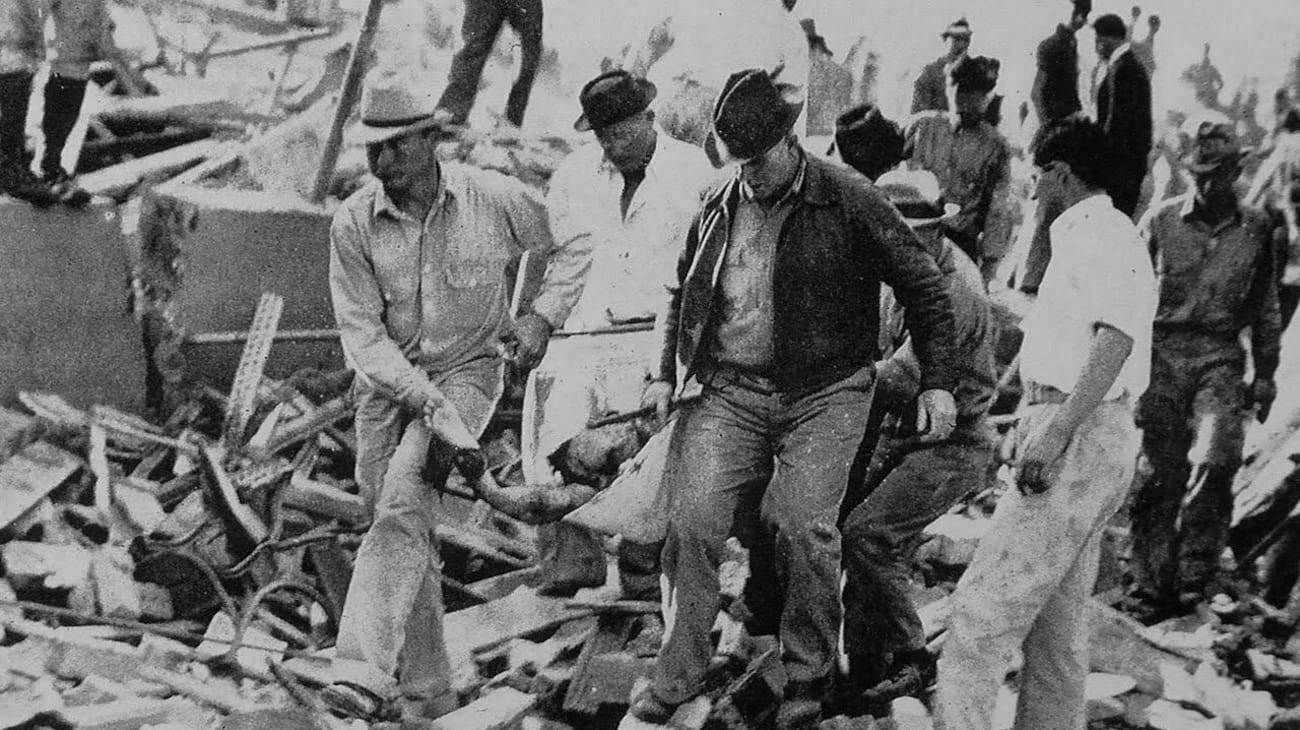
On March 18, 1937, a school in East Texas exploded.
The New London School, a $1 million trophy of the county’s petroleum windfall, had opened only five years earlier, and served the children of hundreds of roughnecks working the nearby oil fields. The sound was heard four miles away, and soon those parents were in the wreckage, many of them digging for their own kids. A young Walter Cronkite, working for the United Press, reached the scene that evening, noting a long line of cars in front of the funeral parlor along the way. As dusk fell, “huge floodlights from the oilfields illuminated a great pile of rubble at which men and women tore with their bare hands,” he wrote in his memoir. He recalled it as the most disturbing assignment of his life. In the end, 298 victims died. Most of them were students in class at the time, between 5th and 11th grade.
The ignition took place in the school’s woodshop, when a teacher switched on an electric sander. But the fuel had been pooling in the walls and crawl spaces of the school for weeks: natural gas, pumped to each of the school’s 72 radiators from a nearby pipeline in a cost-savings arrangement with Parade Gasoline Company, which sold the district a cheaper form of “waste” gas from the top of an oil well.
For weeks, the students had complained of headaches and burning eyes, and so much vapor had gathered, according to a docent at the New London Museum, that when it ignited it sent the eight-inch steel-and-concrete floor up through the classrooms, the ceiling, and the roof. It then fell back to earth, crushing everything in the rubble.
No one had understood ahead of time just how much gas had gathered in the school. The gas, like all gas, was odorless, and in East Texas, as was true everywhere at that time, you couldn’t smell the stuff until it was too late.
The New London School disaster prompted authorities in Texas to pass a first-in-the-nation law that natural gas must be mixed with a “malodorant” so leaks could be smelled. Today, that malodorant — mercaptan — is the sulfurous global standard all companies must add to natural gas so that you recoil and call your utility long before enough has gathered in your home to produce an explosion.
Mercaptan was an easy fix. It changed nothing about the quality or cost of the product. And it’s part of a long history of regulatory pressure forcing companies to make the undetectable effects of their products detectable long after the market was established. This week, that history led to a quiet but, I think, hugely impactful announcement from a leading AI company.
