
Speak, Memory: Dispatches from Inside the Musk-Altman Trial
A neuroscientist proved that memory is rewritten every time it's retrieved. Elon Musk and Sam Altman have been retrieving theirs for ten years. I watched their accounts from court today.

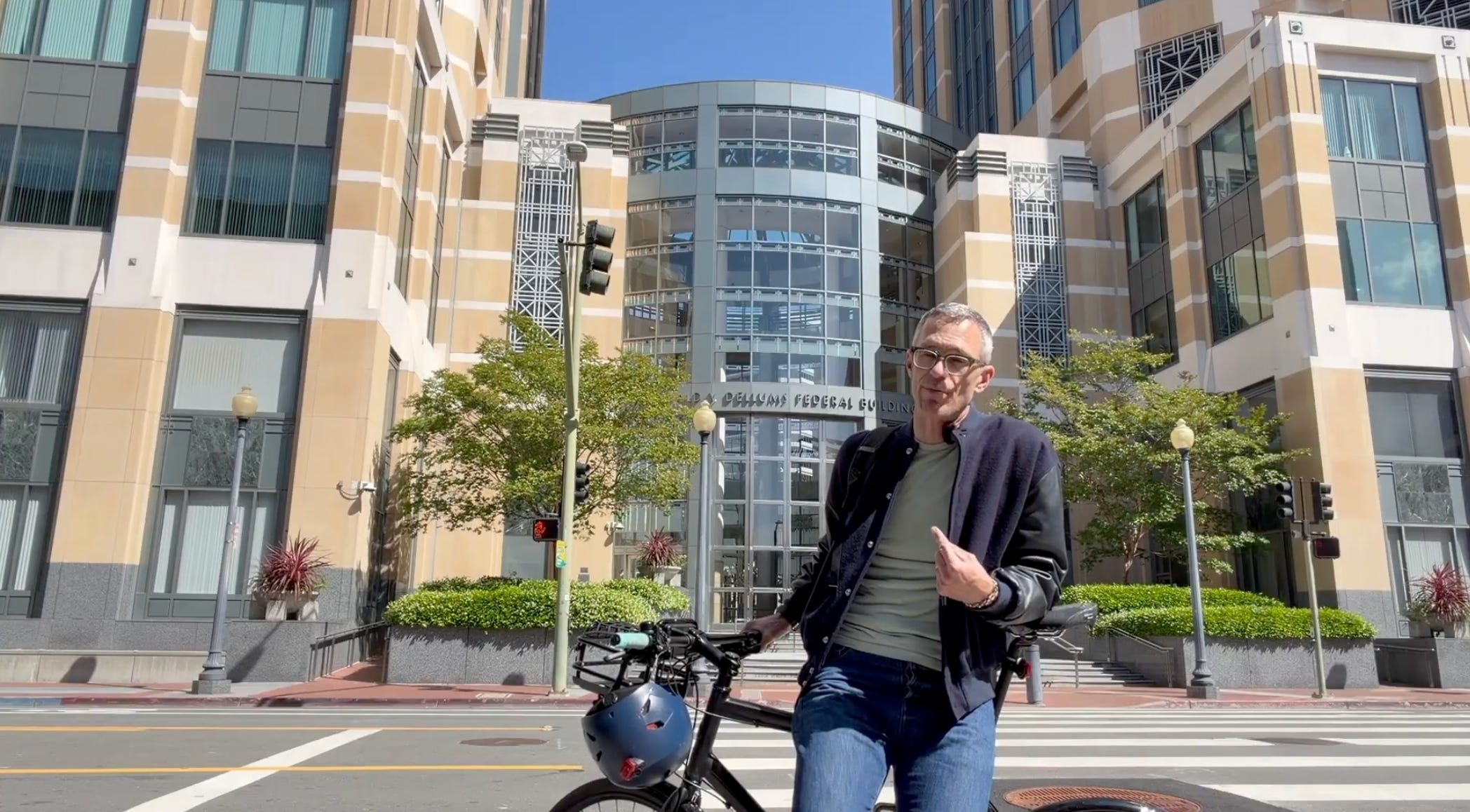
I’m finishing this piece from the Oakland courthouse, about 30 feet from where Elon Musk is being cross-examined right now. I arrived here at 5:30am and lined up with a very friendly group of early-rising reporters and concerned citizens, and got one of the 30 spots inside the courtroom reserved for the public. I went through security next to Greg Brockman, president of OpenAI, and I’m seated with reporters and friends from The Washington Post, NBC News, The Verge, ABC, and CNN, where I’m now a contributor. I’ll give you a breakdown of Musk’s second day of testimony soon.
In 2000, a neuroscientist named Karim Nader published a paper in Nature that blew up his field.
For nearly a century, the prevailing dogma was that memory worked in two stages. A fresh memory was labile — soft, susceptible to disruption. Then, over hours, it consolidated into stable long-term storage. Once consolidated, it was fixed. You could retrieve it as many times as you wanted. It would always say the same thing.
Nader’s experiment showed this. He fear-conditioned rats — pairing a tone with a mild shock until the sound alone made them freeze — then waited a day for the memory to consolidate. He played the tone once more, to reactivate the memory, and immediately after, he injected a protein-synthesis inhibitor called anisomycin directly into the amygdala to interrupt the process. The result? He found that the rats’ fear was gone. Not suppressed. Gone.
The implication was structural: every time you retrieve a memory, it briefly returns to a labile state and has to be actively rewritten. Retrieval isn’t just reading. It’s read-write access. Every time you reach back for something you know, that memory is in play again — and whatever is present at that moment, all your current fears and needs and interests, gets folded in before it restabilizes. The act of remembering turns out to be an act of editing.
Nader called this reconsolidation. It is now among the most replicated findings in memory research.
This week, Elon Musk took the stand in Oakland and reconsolidated his memory of what he and Sam Altman agreed to in 2015. As I’ve been watching today, he says he and Altman had in mind a nonprofit that would literally be in charge of ushering in a new era for humanity. The texts and emails shown in court have some pretty casual ruler-of-worlds language. Stuff like this:
