

Programming note: I’ve just launched The Rip Current Podcast, in which I’m interviewing a different expert each week on hidden forces like racism, money, and corruption.

Paid subscribers get a week’s head start on each episode. Is that fair? Let me know. I began with Catherine Bracy, an expert in the damage that venture capital has done to the world. Next episode, just to keep you on your toes, I’m interviewing my Dad, a historian of slavery, about his young life in India and then in the civil rights movement. Okay, on to this week’s madness…
OpenAI and Google are asking the Trump administration to allow them to train their AI models on other people’s creations, regardless of patent, copyright, or privacy laws. How do the companies defend this vacuuming up of the last legally protected pieces of human creativity? With the time-honored excuse that if they aren’t allowed to, China will get ahead in whatever this AI race is that they seem to be willing to do almost anything to win.
Does this sound problematic to you? Oh, it is. But before we get into why, I’m going to walk you through a little legal history. Stick with me, because it will hopefully give us what we need to understand how it is (and how dispiriting it is) that AI now pumps out a convincing simulation of human creativity, and that we all seem to be ready to drink it down. And the story I’m about to tell you is, in my view, the exact missed train that caused us to wind up in the unfortunate place we are now. Here we go.
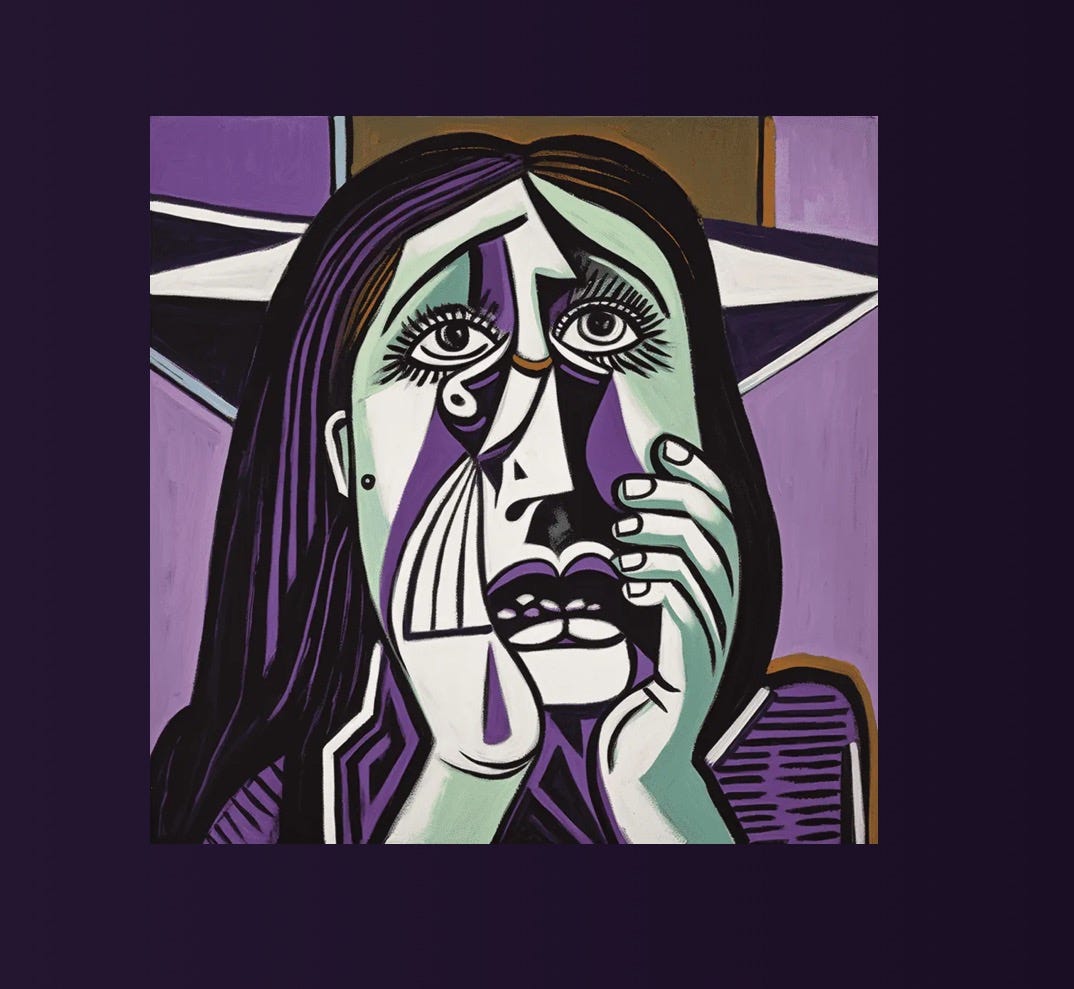
Between 2005 and 2015, America’s writers battled Google in court, and lost.
Two years earlier, the search giant had debuted Google Print, later Google Books, which scanned and made digitally searchable millions of copyrighted works. Many if not most of those authors hadn’t given permission to Google to throw their labor online such that no one would need to buy their books again. And so first the Authors Guild and then the Association of American Publishers filed suit.
For a brief moment, after years in court, Google and the two plaintiffs danced at the edge of what might have been a fair settlement. Under its terms, Google would pay authors for the right to make their work available online, and would give authors and publishers the right to opt out. But it would have been an extremely wide-reaching agreement, one that would have future-proofed Google Books, as it applied not just to the plaintiffs, and not just to American authors and publishers, but to all books worldwide.
After much back and forth between plaintiffs and Google, and under criticism from European governments and groups like the American Society of Journalists and Authors for being too broad, the settlement was ultimately rejected by Judge Denny Chin on March 22, 2011 for essentially giving Google too much. The cases were then combined for trial. And that’s when it went wrong for the authors and publishers. By September 2013 Judge Chin declared his new conviction that Google was in the clear under fair use laws, and dismissed the whole thing. The suit then lost on appeal, and today you can search a portion of more than 40 million books in 500 languages without you or Google having to pay anyone for them.
Okay, here’s why I’m dragging you through the dry guts of a dead lawsuit. In fact, I should have saved this post for next week, because that would have been the 15th anniversary of what I consider perhaps the ultimate missed train in the history of modern techology: the day that Judge Chin rejected the settlement. It was a brief moment of forward-looking wisdom, when Judge Chin saw beyond this suit (and Facebook and the iPhone 4s and Netflix announcing the end of its DVD deliveries and the rest of what was going on in tech that year), and seems to have briefly recognized a gathering of power far beyond simply scanning books.
“While the digitization of books and the creation of a universal digital library would benefit many, the [settlement] would simply go too far. It would permit this class action…to implement a forward-looking business arrangement that would grant Google significant rights to exploit entire books, without permission of the copyright owners. Indeed, the [settlement] would give Google a significant advantage over competitors, rewarding it for engaging in wholesale copying of copyrighted works without permission, while releasing claims well beyond those presented in the case.”
In the end Google won Judge Chin over. Ultimately he seems to have decided that because Google Books was making only excerpts of the books available online, that was a sufficiently “transformative” repurposing of them (one of the tests for claims of copyright violation) to mean it would be useful to researchers (another test) without damaging the books’ market value (and another).
But for a moment he seems to have glimpsed something of what was coming. You can see it in his last sentence. The collapse of the creative industries, the end of fair payment for creative work, and the absorption and regurgitation of our best ideas as throwaway entertainment raises questions, as Chin wrote, “well beyond those presented in the case.”
Yet here we are. That vast repository of written work was deemed “fair use.” And today, online repositories like Google Books have been poured into training AI models, and legal challenges to their use have had to overcome the precedent that Authors Guild, Inc. v. Google, Inc. set. I don’t know if Judge Denny Chin is able or willing to talk about his 2011 moment of foresight, now that he’s seen what the defendants went on to build. I’ll try him. Anyway, whew. Thanks for hanging in there. With that lesson over you can despair with me about the moment we’re now in.
Last week Sam Altman posted a piece of fiction penned, he says, by a new OpenAI model trained in creative writing. “this is the first time i have been really struck by something written by AI,” OpenAI’s founder boasted on X without capitalization. “it got the vibe of metafiction so right.” Whether the billionaire head of the company can be trusted to critique his own product’s writing doesn’t really matter. In a moment I’ll even argue that it doesn’t even matter whether the writing is, in fact, good. What matters is that we’re now in the world that Judge Chin briefly glimpsed, but then waved away.
In 2023, an AI developer assembled and released Books3, a controversial trove of more than 190,000 pirated e-books for AI researchers to use in training their models. Then, last year, Harvard announced that in partnership with Microsoft and OpenAI it would soon be releasing an open-source library of one million public-domain books, no longer under copyright, for the same purpose. The books were drawn in part from Google Books.
The Authors’ Guild and various writers have sued OpenAI for this kind of thing already, but their hopes are dimming in a world where, thanks to decisions like Judge Chin’s, things put on the Internet are mostly considered fair game. And if the Trump administration accepts OpenAI and Google’s suggestions about sweeping aside legal protections for creative works of all kind, we’re in a landscape in which creativity really is reduced to a disposable commodity.
This weekend, waiting for my daughter and her friends to finish their boba and return from a walk, I asked ChatGPT for the first paragraph of a Cold War spy novel in the style of John LeCarre. I got this back in an instant:
The cold was an old enemy, familiar and patient, seeping through Anneliese Keller’s thin gloves as she lit a cigarette with hands that did not shake. Somewhere behind her, in the dark mouth of a tenement doorway, a man was waiting to see if she would run. She did not. To run was to confess, and confession—whether to the Stasi or her handlers in the West—was death. Instead, she inhaled slowly, watching the end of the cigarette flare, an ember in the Berlin gloom. The rendezvous had been compromised; that much was clear. What remained to be seen was whether she had been, too.
Now, is this any good? I read a lot of LeCarre — it’s how I go to sleep each evening — and while it doesn’t quite sting like his writing, it smacks of it. And is it art? In a landmark essay for MIT Technology Review, the philosopher Sean Dorrance Kelly argued that because it’s made by a computer it simply cannot be. But none of this matters.
What we know is that the market value of creative work is about to fall through the floor. Imagine you can come home and ask for a custom piece of fiction or poetry suited to your mood, just as Justine Bateman warned us at NBC that if studio executives have their way with AI you’ll be able to come home and ask for a custom movie starring any scanned-in star you want. Why would you ever pay an author, or a director, or a composer for their time and talents again? Instead, art will be a greatest-hits mashup of vaguely familiar jawlines and C-G-Am-F hit ballads and windswept spy showdowns, offered, vending-machine style, by a handful of multinationals, unless we can either come up with a workable legal strategy from our narrowing list of options, or stick to art that requires in-person human connection, the one thing AI can’t simulate. At least not yet.
A timely writeup, Jacob. Brin & Page, 1999: "We expect that advertising funded search engines will be inherently biased towards the advertisers and away from the needs of the consumers." Until ~2000. Google at the time of this lawsuit: "Organize the world's information and do no evil." Until 2018. Moral of the story: almost everything, like an ad-supported AI search "answer" on google, is not what you thought it was. Biggest question I have going forward is, who is training who?