

In podcast after podcast, I’m asked what I think we can do about the power of Big Tech. It typically comes after a long, dark hour of detailing the effects of A.I. on our minds, and the lessons we can take from past eras in fighting back. And my argument is always the same:
This is an industry that operates at scale, and resistance will have to do the same. It’s tempting to frame the question as if individuals through stoic ideals and personal training and good parenting can shrug off the most successful habit-shaping industry in history. But when the world’s smartest, hardest-working behavioral experts have been deployed to rewire our relationships and hook us into the attention economy, we’ll need more than just discipline. As I always put it: we’ll have to sue.

For me, this isn’t about punishment. (Or at least, it’s not only about punishment.) American case law tends to stem from two broad categories of harm: financial and physical. Steal money? Cause a death? You get sued and/or prosecuted. But to survive the next phase of society with our agency and our relationships intact, we’ll need to add a new category of unacceptable harm, and that’s behavioral harm.
I believe we need to make it as straightforward to describe and measure the way in which a company or a political actor plays our instincts without our consent as it is to describe and measure the dangers of selling a food product without revealing the allergens inside, or of pushing an addictive chemical on someone whose compulsions mean they can’t make healthy choices for themselves. But to get to that point, as I keep arguing, we’ll need to see inside the companies that work us, because it’s not until we see the world through the eyes of the shapers of behavior that we’ll understand how easily behavior is shaped. And as hard as journalists and whistleblowers have worked to give us that transparency, there’s no transparency like a lawsuit, because nothing provides us more raw, sensitive internal communications than discovery.
You can also watch a video discussion of this story here:

This is the month that tech journalists like me have been waiting for, because this is the beginning of a series of lawsuits against the social media giants that will make public troves of internal documents and discussions. As The Verge described it yesterday…
The documents were released last week as part of a major set of trials brought by school districts, state attorneys general, and others against Meta, Snap, TikTok and YouTube, alleging the design of their products harmed young users…The internal documents produced as part of the litigation show that social media companies recognized business value in establishing users at a young age. But they also show how the companies tracked harmful effects that features could have on those users and considered ways to address those risks.
Meta, the parent company of Facebook and Instagram, has put up a site addressing the litigation, and writes there that “these lawsuits misportray our company and the work we do every day to provide young people with safe, valuable experiences online…Despite the snippets of conversations or cherry-picked quotes that plaintiffs’ counsel may use to paint an intentionally misleading picture of the company, we’re proud of the progress we’ve made, we stand by our record of putting teen safety first, and we’ll keep making improvements.”
The snippets of conversation contained in the documents, however, reveal a creative, skilled, and motivated workforce looking to fill the companies’ pipeline with child users. (For a fantastic summary of what’s in the evidence, Tech Oversight Project has produced a report that details many of its most dramatic revelations. You can also watch my interview with its executive director, Sacha Haworth.)
As one email between executives describes Meta CEO Mark Zuckerberg’s marching orders for Facebook, “Mark has decided that the top priority for the company in H1 2017 is teens,” and says that “our overall company goal is total teen time spent.”
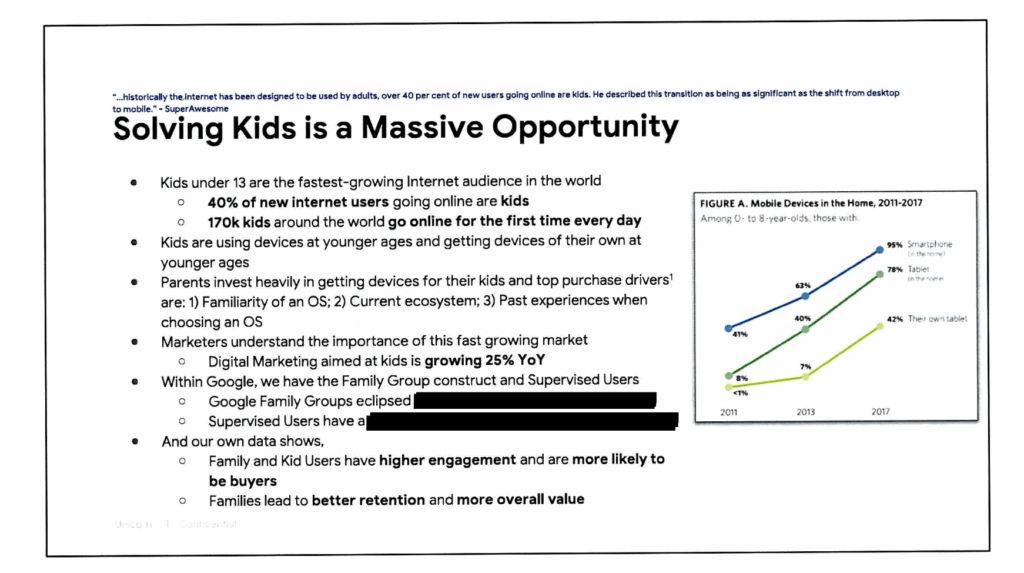
At YouTube, a presentation entitled “Business Case for Kids and Families at Google includes a slide headed “Solving Kids is a Massive Opportunity,” which reads “Family and Kid Users have higher engagement and are more likely to be buyers,” and that “families lead to better retention and more overall value.”
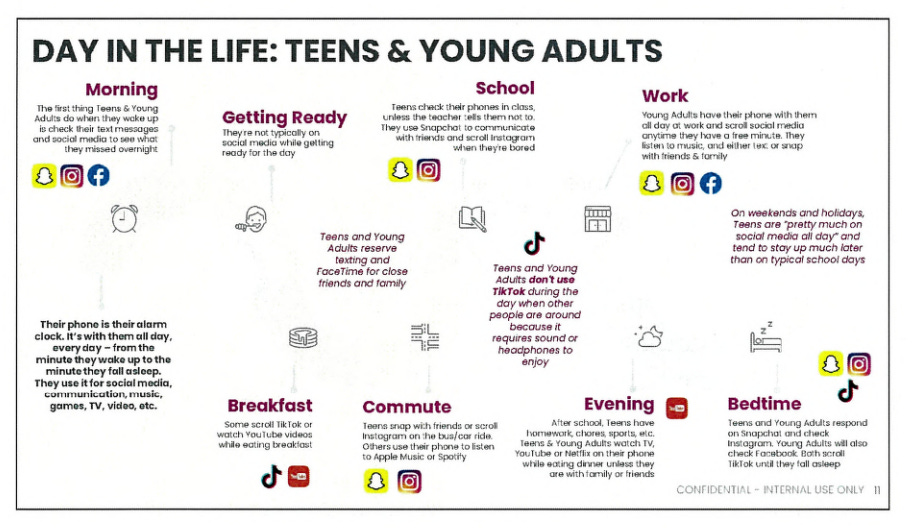
And at SnapChat, a slide from a presentation on “Wellness Perception” offers a dizzying tour of the average teen’s overwhelming “all day” use of social media.
The companies not only exhibit a deep interest in the value of children to their business, they also show a detailed awareness of the harms posed to children by their product.
A TikTok strategy document points out that “TikTok is particularly popular with younger users, who are particularly sensitive to reinforcement in the form of social reward and have minimal ability to self-regulate effectively.” An undated YouTube slide deck points out that “negative wellbeing [sic] effects can result from user behaviors,” and lists late night use, heavy habitual use, unintentional use, and problematic content as the root of the majority of negative effects on well being. And an internal newsletter at Instagram points out that “teens weaponize IG features to torment each other, often without violating standards.”
It took 30 years to put gambling addiction into the diagnostic manual. It took nearly 15 years for lawsuits against tobacco companies to result in a surgeon general’s warning against smoking. These social-media lawsuits are drawing on documents not even a decade old. From seatbelts to helmets to back-up cameras on cars, our regulatory regime has always trailed behind the pace of industry, but it does get there. I believe we’re at the beginning of a new era in which we understand behavioral harms aren’t just a result of personal weakness or bad choices. They’re also the intentional and unintentional effects of an industry that shapes behavior because behavior is its product. I hope and expect that the documents and testimony we’ll see this year will help get us there.
Watch the video discussion of this story here!