

President Trump’s “Liberation Day” performance last week, standing in the Rose Garden with a placard in hand to announce seemingly random tariffs on a long list of countries, was quickly picked apart by the business media and business community. The Economist’s economics editor Henry Curr, for instance, called the plan “crackers.” US Financial Commentator Robert Armstrong of The Financial Times described the tariffs’ effects on the Unhedged Podcast as “a sea of red.” The nation’s top corporate trade association, Business Roundtable, warned of “major harm to American manufacturers, workers, families and exporters.” And everyone soon started figuring out the illogical arithmetic of the specific tariffs assigned to each nation. CBC’s Andrew Chang did a particularly creative and clear job of breaking it down. The Wall Street Journal, after pointing out that the effective tariff rates are now higher than those set by the Smoot-Hawley Act that helped push the United States into the Great Depression, described Trump’s actions this way:
Worse is the bizarre, slapdash way the White House calculated the tariff rates on individual countries. Everyone will pay 10%. Then the White House appears to have calculated each country’s additional tariff rate by dividing its trade deficit with the U.S. by its exports to the U.S. This rate was then cut in half for most countries, which Mr. Trump calls a “discount.” The discordant result is that U.S. adversaries like Iran (10%) and Venezuela (15%) will pay lower rates than friends in Europe (20%), Japan (24%) and Taiwan (32%).
As every talking head went on to explain over the weekend, dividing a nation’s trade deficit by its exports to the US assumes that every nation is supposed to buy exactly the same amount from the US as it sells. But that doesn’t account for the way that some countries have come to specialize in certain goods and services, from coffee to semiconductors. If every nation had a perfect balance of goods to buy and sell, there’d be no need for economic strategy, no opportunity for economic growth, and no incentive for foreign investment.
In January 2023, at the Consumer Electronics Show in Las Vegas, I saw the possibility of a new world order rising in front of me. I was standing in a vast open showroom of luxury EVs I couldn’t identify. The sales literature spoke of Italian design and German engineering. I ran a hand across the leather seats, and admired the aggressive bodywork. “Excuse me,” I asked a man working the floor. “Where are these cars made?”
“Vietnam,” he said proudly.

CES, as the show is known, has traditionally been a meeting place for companies and their manufacturers, an event where the rest of us ogle the gadgets while hands shake in private rooms over outsourcing deals. And the dominant outsourcing nation at that show for decades was, of course, China. Thousands of representatives of factories and fabricators from cities like Shenzhen and Ghuangzhou occupied one vast hall of the gathering, awaiting potential clients.
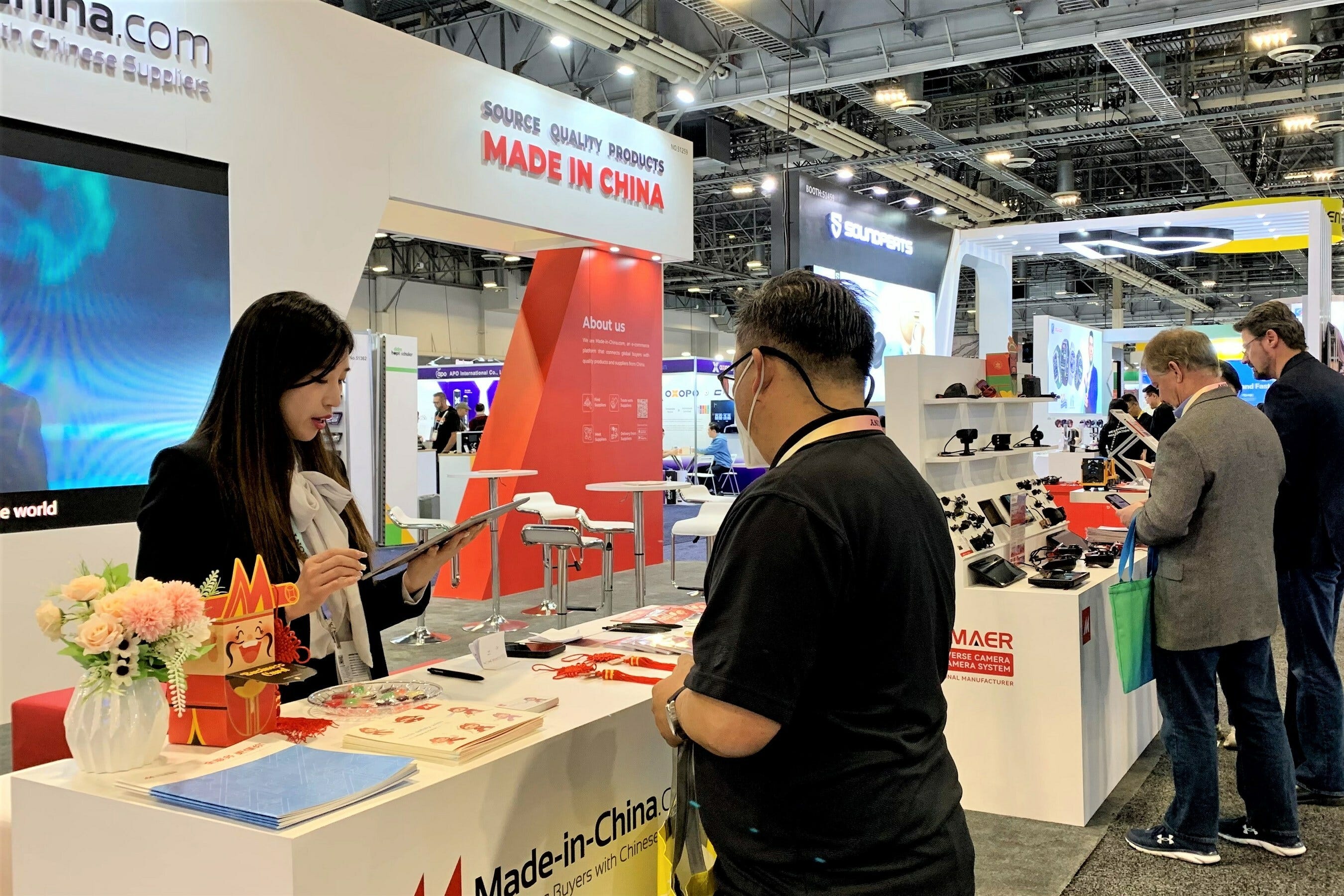
But in January 2023 there was a new section of the show set aside for Vietnam, and another for India. Those nations, which I’d never seen before in Vegas, were there to offer their companies as the new outsourcing partners for the United States, as our tensions with China grew. The United States already accounts for roughly 30% of Vietnam’s exports. A third of our shoes are made there, including half of the Nikes we wear. And over the last two years Vietnam has been growing as a manufacturing source for smartphones, televisions, and integrated circuits. What I was witnessing at CES was truly the rise of a possible post-China global order.
That’s all over now.
Tariffs are a hand grenade, one you traditionally wave around to threaten your economic rivals by setting a new, horrifying tone in the room. But no one expects anyone to actually throw the grenade at their own feet in the middle of the meeting.
When the Trump administration threatened Vietnam with tariffs last month, the country saw the grenade in our hand, and prepared to negotiate over its own tariffs on US imports. The expectation was that a duty of as much as 10% might be imposed on their exports to us. A frightening grenade indeed.
But the negotiations never happened, and the Trump administration pulled the pin anyway. Now the live grenade has been fumbled under the car seats, where it’s rattling around. And the damage is going to be worse than anyone expected. Vietnam faces tariffs of 46%. Thailand will see 36%. Cambodia, which has been trying to grow past its reliance on tourism and garment exports, will suffer a staggering 49%. (Russia is not among the countries on the long list.) Tiny Lesotho is for some reason among the hardest-hit. It depends on exports like textiles and diamonds to the United States for 10% of its GDP. An economist told NBC News that these inexplicable tariffs mean the tiny Southern African nation “will be dead.”
Treasury Secretary Scott Bessent told reporters on the day of the announcement that Americans have nothing to worry about. When asked about the added cost of imported goods in the United States, Bessent said “I’m not sure why Americans would have to pay more in the short term,” and proceeded to claim that upcoming tax cuts will balance things out for working Americans. “We don’t know what the price effects are going to be,” he told NBC News, in a moment of either outright dishonesty or personal confusion — frightening either way from the nation’s Chief Financial Officer. Reporters didn’t seem to know what to do with his insistence that this hand grenade won’t hurt when it goes off. Kristen Welker of Meet The Press was similarly flummoxed by his insistence on Sunday that retiring Americans don’t worry about the day-to-day fluctuations of the stock market. I’m not sure how I would have handled him either.
The logic of the Trump administration seems to be that making imports unaffordable will inspire us to do it all ourselves. As CNN reported from the Rose Garden:
“It’s our declaration of economic independence,” Trump said Wednesday. “Jobs and factories will come roaring back into our country, and you see it happening already.”
But this, as usual, is not true.
If the tariffs are the arrow, uncertainty is the poison, and American companies are doubled over with it right now.
Should a CEO invest in a Mexican factory, where production is cheaper? No, bad idea: tariffs will wipe out those savings! But what if President Trump changes his mind in a month, and a US factory winds up costing far more than a Mexican factory does? Oh no!
This isn’t a theoretical dilemma. Former Obama treasury official-turned-private investor Steven Rattner reported this weekend that an official from the first Trump administration recently told investors on a private call that automobiles built in Mexico wouldn’t be hit with the same tariffs as would those coming from Canada. Then both countries were hit with the same tariffs.
Better to just sit tight. And that’s where we’re at.
The S&P Global flash factory gauge, which measures any “roaring back,” found that US factory activity is slipping. M&A activity hit a 20-year low in the first quarter. While the jobs report on Friday was sound, consumer confidence is at a 12-year low. And prediction markets, which I hate for philosophical reasons, but which continue to be surprisingly accurate at forecasting things like, well, Trump winning the White House a second time, have put the odds of a recession above 50% since Wednesday.
Here’s how world leaders are reacting. Singapore’s Prime Minister said on TikTok that his and other countries has long called for reform when it comes to international trade, but “what the US is doing now is not reform. It is abandoning the entire system it had created. Its new approach of reciprocal tariffs is a complete rejection of the [World Trade Organization] framework.” German Vice Chancellor and Economy Minister Robert Habeck told ABC News that liberation day should instead be called “inflation day” for American consumers, and that "the U.S. mania for tariffs could set off a spiral that could also pull countries into recession and cause massive damage worldwide."
Is all of this some brilliant, secret plan to reset the world economic order in America’s favor? We were already the planet’s most vibrant and reliable economy, so it’s not clear what improvements we were after. Perhaps it will all be worth it because we’ll stick it to China, our closest economic rival! They now face a combined tariff rate above 60%, after all. But they’re not backing down: on Friday they declared a 34% tariff on US imports. And reporting by The Financial Times’s Martin Wolf last week suggests a scenario that could truly cut the United States out of the future global economic order.
Wolf had just returned from China, whose leaders were preparing for a deeply damaging short-term wound from its largest largest trading partner and fiercest economic competitor. Wolf writes that China is, of course, worried about the immediate effects. But he points out that China experienced something very similar to what President Trump is imposing on his own nation, in the form of Mao Zedong’s purges of bureaucrats, academics, and other elites. The chairman’s hollowing-out of Chinese education and innovation set the nation back to a place of intellectual and economic stagnation that it took decades to escape. In the US, Wolf says, the Chinese are seeing a repeat of their history. As President Trump purges American universities, directly damaging our single greatest economic strength — our ability to innovate, and especially to innovate our way out of trouble — China sees a chance to take advantage of our misfortune on the world stage.
The Trump administration, and seemingly Trump himself, seems to have somehow relished the waving of the grenade. They wanted to do it so badly they forgot to put it down once everyone backed away. And now it’s too late to defuse it. It will hurt everyone. And while it will do permanent generational damage to nations like Lesotho that have no other prospects, the nation it’s most intended to hurt is already looking forward to the aftermath. While China holds its ears and prepares to suffer the concussive blast of the grenade we’ve dropped, it’s getting ready to take advantage of how wounded we will be, and how long it will take us to recover. Because as it well knows, it could take us a long, long time.
Okay, one last thing.
Everything I’ve written above unfolded over the course of only four days. But one worthwhile fact to note is that the President played golf for two of them.
Sixty percent of American households own stock, and on Thursday it was clear that the effects on investment and retirement accounts were going to be deep and painful. But that night he flew to Florida. On Friday, waking at Mar-a-Lago, he began the day by posting THIS IS A GREAT TIME TO GET RICH on Truth Social, and then headed to the links. That day the Dow, the S&P 500, and the Nasdaq all continued to fall, dropping more than 5% — the worst market collapse since the pandemic. Meanwhile, Trump was shuttling between golf courses, double-booked at simultaneous tournaments paying him to be on two of his properties. (The AP in 2022 estimated that Marine One, the helicopter that set Trump down at each of these events, costs between $16,700 and $20,000 per hour.) The LIV tournament at Trump National Doral is, of course, Saudi-backed. Teeing off there was, among others, Yasir Al-Rumayyan, the head of Saudi’s sovereign wealth fund, which put $2 billion into Trump’s son-in-law Jared Kushner’s private equity firm after Trump’s first term. As the WSJ reports, President Trump is expected to travel to Saudi Arabia soon, his first foreign trip of his second term. Saudi is the host of US-brokered negotiations between Ukraine and Russia. And Saudi has committed more than $600 billion in investments in the US, according to The White House. I do not envy the poor Fox News correspondent assigned the unenviable job Friday of coming up with flattering profiles of Trump as a “great ambassador of the game.”
As Trump took the day off Friday, Federal Reserve Chairman Jerome Powell, arguably the last independent office-holder in the United States, told a conference that the tariffs and their likely effects on inflation are “significantly larger than expected,” according to The Associated Press. Powell, whose term ends 13 months from now, predicted “at least a temporary rise in inflation.” He then added “it is also possible that the effects could be more persistent.”
Next on The Podcast
I’ve had a fantastic run of guests on The Rip Current so far, including psychologist and researcher Jennifer Freyd, who explained how public figures slip out from under accountability using the same choreography, and investigative journalist Kat Tenbarge, who explained the big business of public influence paid for by celebrities. They’re part of a long lineup of experts in invisible forces that I’m excited to bring to you. On Wednesday I’ll drop my episode with Harvard Law professor Lawrence Lessig, whose journey has brought him from prophet of open source software and founder of Creative Commons to arriving, in the age of AI, at a nearly opposite set of beliefs. Please consider sharing The Rip Current, and my conversation with Lessig, with anyone in your life who believes we shouldn’t adapt the law to modern technology. Paid subscribers get a week’s head start on the rest of you.
Theme Song Inspiration
I’m engaging my good friend, composer Hil Jaeger, to create a theme song for me, and in our early conversations she’s asked me for a sort of sonic mood board to inform what I’m after. It’s been fun to put together, and I figured I’d share it with you. May it bring you some of whatever you need this week.